The First Birthday of Jasmine

Jasmine’s party was last week, but she is officially one today. Happy birthday, nieta!

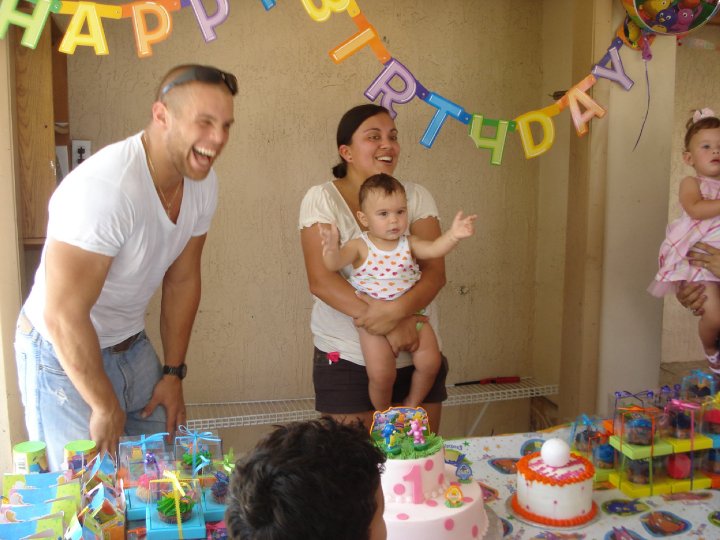
If the pictures on Facebook are any indication, Mom and Dad had a real barn burner of a birthday celebration. I saw miniature horses and pigs, goats and all kinds of fun stuff. I snagged these pictures to post here. Look how happy Tim looks! Carry has the most beautiful smile. Jassy is giving us the peace sign.

Many thanks for sharing the pictures, Carry.

Tagged , , ,

Memorial Day

12-16-2005 018, originally uploaded by tim_elhajj.

At Present Tense (past imperfect), we like to honor the veterans.

This is a picture of my son in the engine room of the USCGC Bayberry, from when he was stationed at Port Seattle. I like to think he’s giving the thumbs up to past and present veterans everywhere, especially his wife Carry, who I have heard Tim affectionately refer to as the CO.*

*That’s CO as in Commanding Officer, for all you non-miliatry types out there.

Tagged , , , ,

The Ticking is the Bomb by Nick Flynn

The circumstances of Nick Flynn’s life are grim: abandoned by his father as an infant, haunted by an addiction and the aftermath of a mother who took her own life. But The Ticking is the Bomb isn’t a misery memoir. It’s not a heartwarming tale of redemption. Flynn never casts himself as the victim. Many of the most shocking details about his life are only mentioned in passing. This is a memoir about Flynn’s fears of fatherhood and intimacy, and—somehow—his growing obsession with torture and pain. Under Flynn’s deft hand, the connections between his own personal fears, American fears of terrorist attack, and the fears of torturer and tortured alike seem plain enough, but each is made all the more urgent by the immediacy of the Abu Ghraib scandal, or the infant growing in its mother’s womb.

This is the way to tell a memoir.

He won me as a fan with, Another Bullshit Night in Suck City, his first memoir, a meditation on his father and homelessness. Both that book and this one are organized in the same nonlinear fashion. You find little parenthetical dates at the start of some chapters to help you orient the chapter into the overall timeline. It sounds confusing, but he does a good job of establishing and then returning to certain characters and situations, so it works. It feels like an organic approximation of the act of reflection, or maybe what it feels like to sort through a lifetime of memories and try to make sense of it all. As far as narrative goes, this book seems like a series of failed relationships and one lingering, seemingly fragile success. He expresses his growing outrage over American torture, which eventually gives way to a slightly crazed, imploring tenacity. During the months that preceded the invasion of Iraq, I can remember arguing for peace with the same sort of growing intensity. In the end—watching the shock and awe on the network news—I remember feeling angry and powerless, totally wrung out. I remember thinking that I had to stop arguing, that I risked turning into some sort of irrational crank.

Maybe that’s what it takes.

Tagged , , ,

Brevity Magazine: Concise Literary Nonfiction


Brevity is another good venue for nonfiction writers.

Essays published on Brevity are 750 words or less. Flash nonfiction, a twist on flash fiction, which Wikipedia tells me has been popular for about twenty or more years, meaning it’s a form that’s really come into its own with the advent of the Web and (presumably) online journals. You won’t find too many journals devoted entirely to nonfiction, and fewer still are nonfiction journals that impose a word count on essays. I can think of only Brevity.

Brevity also has a blog, which is a good place to read about publishing opportunities for nonfiction writers, the latest nonfiction furor or book, and—best of all—brief blog posts from authors who appear in the latest issue of Brevity magazine. These author posts are my favorites, offering insight or commentary on some aspect of the published story—think of it as an author reading in print.

Dinty Moore (Between Panic and Desire and The Accidental Buddhist) is Brevity’s editor. Warm, generous, smart, Dinty has published some of my pieces, turned some other pieces down, and even helped me with my childhood memoir project, which I’m still hammering away on. He’s a great guy.

Tagged , , , , , ,

Asparagus Quiche

quiche (5)

quiche (1)

quiche (11)

This is tasty, easy to make. Aaron loves it, Kennedy not so much.

The big difference between this recipe and the linked orignal is that I use non fat milk (because that’s what we drink) and it seems to always need an extra five minutes in the oven.

Ingredients:

  • vegetable cooking spray
  • 1/2 pound fresh asparagus, tough ends trimmed and cut into 1/2 inch pieces
  • 4 eggs
  • 1 cup non fat milk
  • 1/2 teaspoon salt
  • 1/4 teaspoon black pepper
  • 1/4 teaspoon nutmeg
  • 1/8 teaspoon garlic powder
  • 5 slices turkey bacon , cooked and crumbled
  • 1 1/2 cups shredded Swiss cheese

Steps:

  1. Preheat oven to 350 degrees.
  2. Coat a 9 inch pie plate with vegetable cooking spray.
  3. In a saucepan, place asparagus into boiling water and cook for 4-6 minutes, or until tender but still firm. Drain well.
  4. Sprinkle crumbled bacon and asparagus into pie plate.
  5. Top with cheese.
  6. In a bowl, beat together, eggs, milk, salt, pepper, nutmeg, and garlic powder. Pour egg mixture on top of cheese.
  7. Bake, uncovered for 30 minutes or until golden and just set in the center. Makes 8 servings.

Adapted from Linda’s Eating Well, Living Thin

Tagged , , , ,

Tim Elhajj in The Yalobusha Review

I got my copy of The Yalobusha Review in the mail last night. My story 20/20 appears in this volume, and I couldn’t be more excited. This is the first paper bound literary magazine where my work has been published. I was looking it over at lunch today and feel proud to be in the same magazine with such great writers and such good work.

I’ve reprinted 20/20 on this site, so you can have a look.

Tagged , , ,

Dopefiend, a Recovery Memoir in Twelve Parts

Over twenty years ago, I moved to New York City to kick a heroin habit. I had less than twenty dollars in my pocket and was leaving behind my beautiful three-year-old boy, who had his mother’s straw colored hair and clear blue eyes, exactly the opposite of my own dark countenance. I searched for some recognizable piece of myself in his chipper smiling face but couldn’t find much.

I lived in Steelton, a small-town in south central Pennsylvania. I had tried several times to stop using drugs there, but had found little success. There was a guy in Steelton who had been a heroin addict himself but had been clean for about five years: Scotty G. At the time, it seemed unimaginable to me that anyone who had once used heroin could go so long without the drug. Scotty was stocky with an open, friendly face. He wore his blond hair in a carefully greased crew cut, two slick curbs of hair rising on the receding hairline of his forehead like a McDonald’s sign. To ward off the coming winter, he wore a long pea coat. Scotty liked to wear black Wayfarer sunglasses, a host of gold rings on his fingers, and thick ropes of gold chain around his neck. He had a beautiful girlfriend, a busty redhead who smoked long brown cigarettes. Scotty always drove a new Ford sedan with dealer plates attached by magnets to the trunk. When dopefiends get sober, they invariably do one of two things to make a living: car sales or drug and alcohol counseling. Scotty worked at the big Ford dealership on Paxton and Cameron Streets, but he liked to show up to the 12-step meetings and do a little counseling on the side. We envied his jewelry, his shiny sedan, his pneumatic girlfriend. But his clean time held us in awe. Milling about Scotty during a smoke break at the meeting, we sipped coffee from Styrofoam cups and listened to whatever he had to say.

“There are only two things you need to do to stay sober,” Scotty said.

We all raised our eyebrows. We knew there were at least twelve things required in the meetings, even if we couldn’t articulate exactly what those things were. Yet here was Scotty talking about doing only two. Seemed like a bargain. We all shuffled in a little bit closer.

“First,” Scotty said. “Don’t get high.”

This was an obvious first step and a little chuckle rose up from the seven or eight of us standing there. If you’re not an addict, it may seem like this solves the entire problem. It does not. The list of things that can impose a moratorium on drug use is endless. Someone gets busted somewhere along the distribution chain and suddenly there are no drugs available. You have to stop. Or one day you might not be able to get your money together. And: you can always get busted. Not getting high is as much a part of getting high as being able to poke a vein or get your money together. The trick isn’t to stop using drugs, but to remain abstinent for the long haul.

“Second,” Scotty said.

And here he paused for effect and held up two fingers. This was the money step: the crucial information we needed to stay clean. The signet ring on Scotty’s stubby pinky glittered in the afternoon sun. I didn’t want to seem too eager, but I couldn’t help but feel that I was about to hear something momentous. I leaned in a little closer.

Scotty had a little half smile on his lips as he sipped his coffee and adjusted his coat.

“Boys,” he said. He glanced to his left and then to the right. When he was sure he had our undivided attention, he said: “Change your whole fucking life around.”

He laughed heartily at his own little joke and stroked his tummy. The rest of us stood there in silence. Scotty crushed out his cigarette and grinned. “Come on,” he said, walking past us. “Let’s get back to the meeting.”

Fucking Scotty G.

He was just toying with us then, but I have come to realize that Scotty G.’s little joke wasn’t really all that far from the truth. To successfully stop using drugs, I had to change just about every aspect of my life: I needed a spiritual, emotional, and intellectual makeover of the most sweeping kind.

Of course, I didn’t understand any of this back then. None of us did.

We all groaned and smirked and scowled. Someone shook his head. Another person laughed good-naturedly and said, “Cocksucker.” We were a forlorn little group of recovering addicts, who thought we had stumbled upon a bargain. Instead we had the same old dusty twelve “To Dos” we started with.

We all turned together as one and headed back into the church basement. The only way to get where I wanted to go was to do all twelve.

And it was a good thing I did.

As it turns out, my son grew from a beautiful blonde boy to a strapping hulk of a young man. He towers over me, his eyes still blue, his hair still clipped short. Over the years, he has looked skeptically at my long tresses, my affinity to dress in faded black jeans and combat boots, or my deep and abiding loathing for athleticism of any kind. The one thing we have in common is a penchant for self destruction: This tendency of ours is the most recognizable piece of me that I have ever found in him. The only way I could hope to help him with it, was to first find my own way through the maze.

Here is my story in twelve parts: a part for each step, a step for each part.

Tagged , , , , , , , , , , , ,

New York Times Book Reviewer Invites Your Shock, Outrage

Charles Bock invites you to be outraged. This past Sunday Bock reviewed John D’Agata’s new nonfiction book, “About a Mountain,” describing the material this way:

The mountain that John D’Agata is ostensibly concerned with … is Yucca Mountain, located approximately 100 miles north of Las Vegas. … [S]ince the mid-1980s, the United States government has been doing back flips to bury the country’s entire reservoir of spent nuclear waste — some 77,000 tons of apocalyptic yumminess — deep inside Yucca. In the summer of 2002, the summer after D’Agata helped his mother move to a Vegas suburb, Congress was proceeding with plans to make the mountain a nuclear dump. Also that summer, 16-year-old Levi Presley jumped to his death from the observation deck of a third-rate Vegas hotel. These subjects, disparate though they are, animate D’Agata’s sprawling narrative.

But Bock doesn’t want to direct your outrage toward government backed destruction of the environment, youth suicide, or even sprawling nonfiction narratives. No. He wants to direct your rage to a few of D’Agata’s footnotes.

Yes, that’s right: the footnotes.

With such weighty material to discuss, it seems ridiculous to zero in on footnotes but perhaps these are some outrageous footnotes, deserving of the full weight of our scorn. D’Agata writes nonfiction, you see, and he acknowledges in one of his naughty footnotes that he conflates the dates of two key events in his story by three days. MY GOD.

Bock uses inflammatory language, calling the material referred to by the footnote a “lie.” He goes on to charge D’Agata with playing “fast and loose with a verifiable historical date.” I suppose this is true if by “verifiable” Bock means that he had to read the footnote where D’Agata presents the discrepancy. But I wonder if adding footnotes to nonfiction really deserves the “fast and loose” qualifier that’s typically employed to discuss immoral women, or deviant sexual behavior (as fun as those things can be!).

To be fair, Bock speaks highly of D’Agata’s work:

Rarely does D’Agata betray his emotions or reactions to an event; rather, he works by establishing a scene, introducing tangentially related elements, building layers of complexity and scope, then jump-cutting or circling back at just the right moment, guiding the reader safely — and unexpectedly — to a destination D’Agata had in sight the whole time.

And Bock understands the bigger picture. He knows what D’Agata is trying to do with creative nonfiction, not just in this book, but in the whole of his career:

As D’Agata himself writes, in his introduction to “The Lost Origins of the Essay”: “Do we read nonfiction in order to receive information, or do we read it to experience art? It’s not very clear sometimes. So this is a book that will try to offer the reader a clear objective: I am here in search of art.”

But ultimately Bock finds D’Agata’s voice lacking, having lost nothing less than his “moral authority” by conflating these dates. Although D’Agata offers no explanation for this conflation, Bock helpfully tenders a reason of his own: “for the sake of a tight narrative hook.” I don’t know. I haven’t read the book. But even knowing that the date of this child’s suicide has been conflated with some important back room vote doesn’t make the hook of this hard-to-grasp story much tighter for me. In Bock’s own words, the hook seems built on “layers of complexity and scope”; it does not easily give itself to a quick one line summary: this boy dies, that deal done. But even if we concede that a tidier hook is the reason for the conflation: Is it worthy of our scorn?

I’d argue that all of creative nonfiction suffers when we—writers and readers of creative nonfiction—allow journalists to manipulate us so easily. We do have to be wary of authors who pass off their fictions as truth. But do we need to be so dogmatic that a footnote raises a larger cry from us than anything found in our texts?

Of course, Bock can evaluate the book and the writer in whatever way he chooses. And calling into question the veracity of nonfiction is (sadly) the norm these days. I do want to know if the nonfiction book I’m reading has been made up. I just get tired of journalists revving up the scorn machine to score a point.

If John D’Agata can lose the moral high ground for footnoting his work, what does that say about us as readers and writers?

Tagged , , , , , , , , ,

Crazy Heart

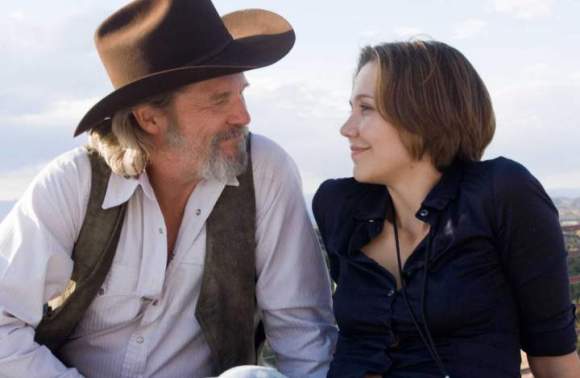
Jeff Bridges is great, but this is one slow movie, with very little that’s new or interesting. I am sure I have seen this story many times before, but this time Jeff Bridges is in it, singing C&W songs.

It’s hard to believe Maggie Gyllenhaal got an Oscar nomination for this. She’s not terrible, but she didn’t seem to bring much to this role. I have not read the book, but I got the sense that there must have been some dramatic tinkering going on with Bad’s alcoholic bottom. Was it softened up to make him seem less reprehensible? If so, that was a mistake. Maggie’s reaction seemed somewhat out-of-line and threw the rest of the movie off the rails.

The one thing that surprised me was Robert Duvall – The whole movie was by the numbers, but his was the one role that offered a pleasant surprise. I couldn’t figure out how his character functioned in the story until it was revealed (and it wasn’t like it was a big Hollywood reveal, but more like I was surprised that his character was the one playing that part, a crucial role for these kind of films). I thought it would be Maggie or the agent guy on the phone. And for all the singing that Bridges does, I thought Duvall’s little spoken word song was the most poignant of all. Good call on adding it to the closing credits.

Tagged , , , ,