Tag Archives: Tim Elhajj

Tim Elhajj in Brevity

Trusty blue nova

I’m pleased to announce that my story, Sobering, appears in the Winter 2011 issue of Brevity.

Brevity has this to say about the issue:

The Winter 2011 issue of Brevity offers eighteen concise essays — rich examples of the experimentation, illumination, and surprise that can come with the very brief form.

Included is one our briefest essays yet, from the esteemed Steven Barthelme, and some of our favorite authors returning for an encore, including Richard Terrill, Lance Larsen, and Tim Elhajj. Meanwhile, Linsey Maughan graces us with her first creative nonfiction publication ever, and more than a few graduate student authors display their growing talents and strengths.

Tagged , , , ,

Got Junk?

Holly and I are collaborating on an online literary magazine called Junk. From the press release:

Tim Elhajj and Holly Huckeba have joined forces to bring you Junk, a literary fix at http://www.junklit.com. We’re a nonfiction literary magazine that focuses on addiction, but you don’t have to be an addict to submit to us.

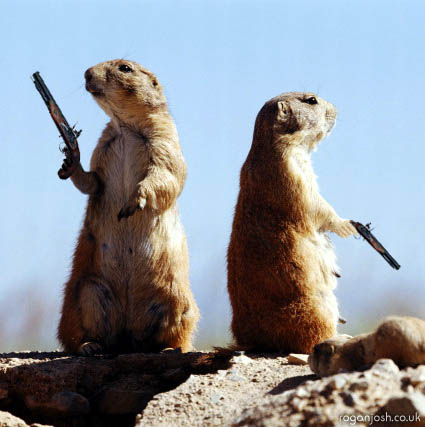
That white elephant (pictured) is Whitey, our mascot. When it comes to memoir about addiction, Whitey is the (literary) elephant in the room that no one talks about (shhhh).

We just published our first official issue, a touching story from Elizabeth Westmark called Detritus.

Holly and I have some work posted, too. Check it out. I’d love to get your feedback. This is something I have always wanted to do and I’m so pleased it’s finally coming into its own.

I have always felt very strongly two things: 1) our creativity is one of the most powerful forces each of us has for creating good in the world; 2) memoirs about addiction and addicts are legion, but for some reason this work only appears in the same predictable ways, time after time. Junk is an attempt to bring these two ideas together and have some fun.

But mostly have fun.

I can’t tell you how thrilled I am that Holly has agreed to work with me on this. I love working on creative projects with her but only realized this a few years ago, when Holly signed up to create memory books for the entire fifth grade as our kids graduated to middle school. It was early in the school year and she asked if I wanted to be part of it.

I laughed. “No way,” I said. “Count me out.”

Of course the plan for the memory books expanded. Then it contracted. Some of the fifth graders were confused. Others were prolific. Finally we came upon zero hour: it was the weekened before the memory books were due. Holly had so many stacks of art work, a few lists of names, and a lot of ideas.

“Are you going to help,” Holly said.

What could I say? Of course I would.

We ordered pizza for the kids and temporarliy lifted all TV and video game restrictions. We took all the art work to my office and spread it out on a ping pong table. The coffee machine clucked to life. We started trading ideas. The copiers and printers began humming. We got out the sicssors and started doing layouts.  The paper cutter made its chop chop noise. We sent out for Chinese. Finally, in the middle of the night, those memory books started coming to life. I had no idea it would be so much fun.

This weekend before last, Holly and I were at it again. We scoured our little corner of Washington to capture a photograph to go with Elizabeth’s fine story. What fun!

We posted the press release on the blog for the journal, where we post updates about research, all types of addiction, or literature that strikes our fancy. Our goal is to use the blog to create a community around the journal and see what happens.

Won’t you join us?

Tagged , , , , , , , , , ,

Dopefiend Forthcoming from Central Recovery Press in October 2011!

Four Views of a Book Press

I signed a contract with a book publisher!

Dopefiend* is forthcoming from Central Recovery Press in October 2011. I am so excited and pleased.

Central Recovery Press first contacted me in early spring. I signed in late September. In-between was much book publishing drama. It’s nothing like what I imagined. I say that, but I am no longer even sure what I imagined. I just know I agonized over everything.

You always read about these wonderfully talented writers who were poor business people and ended up dying penniless and lonely in some terrible place. I was determined not to let that happen to me. I asked about print runs, wholesale and retail prices, and means of distribution, but the person I worked with—a kind soul from upstate NY named Tom Woll—liked to answer these type questions in general terms. I could never tell if he thought I was somewhat slow or if he was  just trying to protect me from myself.

Probably a little of both.

In the end, I had to reach out to all my writer friends and acquaintances for help. That’s what really turned the tide and helped me understand what was going on. It’s one thing to see yourself as a promising new voice. No matter how many rejections come, you’re always able to shrug it off. Writers get rejected. This is just what we do. In a sense, we’re manufacturing rejection. But being asked to deliver on a vivid and engaging manuscript is another story altogether. I didn’t see it right off, but now I realize I was overwhelmed, intimidated, and mabye even a little frightened.

Fortunately I had a host of writers and friends to rely on for everything from sanity checks to encouragement. Much thanks to: William Bradley, Dinty Moore, Matt Briggs, Rachael Brownell, Diane Diekman, Karna Converse, Carter Jefferson, Grace Skibicki, William Pitt Root, Tom Catton, Ira Sukrungruang, and I am sure a few others who I am forgetting as I write this.

And many thanks to Holly—a wonderfully talented writer in her own right, and my best reader and favorite critic—for putting up with me all summer long and for cleaning out some room in the house where I can write. I realize that I have been offered a wonderful opportunity, one that not many writers get.

Now my job is to write the best book I can produce.

*Dopefiend is the tentative title. I agreed to come up with a new title, but I haven’t found anything I like just yet.

Tagged , , , , , , , , , , , , , , ,

Tim Elhajj Interview With Back to Back Announcements

My friend and fellow writer from the land of rain and fir trees Deanna Hershiser posted an interview we did together on her blog.

I’m discussing the risks involved with writing memoir and even a little about my writing process and some thoughts on work life balance. Somehow I end up revealing to her two announcements that have been in the works for a while now, but for some reason haven’t made it to this blog yet. I’m sure I’ll post both of them eventually, but why wait?

Go on over there and check it out now: junking with Tim Elhajj.

Tagged , , , , , ,

Tim Elhajj in Guernica

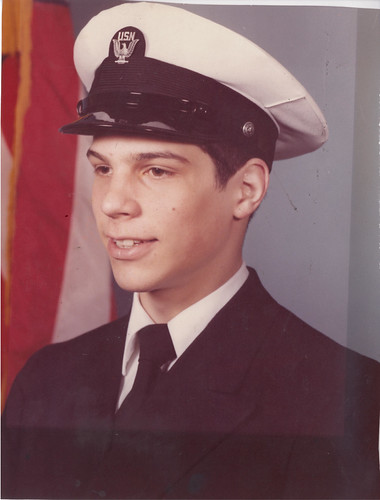
A portrait of Tim Elhajj as a young seaman

I have a story up this morning at Guernica, a delightful online magazine that rides the slim line between mainstream news site and literary journal. I am so proud of  my story, An Unfortuante Discharge Early in My Naval Career. I am so pleased it found a home at Guernica.

I have tried with varying amounts of success to write about this experience before. I have always known I would write about it again one day, but I probably wouldn’t have attempted it this time around were it not for a brief craft essay written by Kerry Cohen that appeared on Brevity early this year (discussed here).

Once I started writing, the story came surprisingly quick, but I had a bit of trouble with the ending. I’m not a very political person, but Gay Rights is one of the few issues I do feel strongly about, and I wanted to find a way to present my feelings in an overt fashion, but it kept coming out wrong—like a writer who knows he is not very political, but who nevertheless tries to make some deep political statement known.

Despite these problems, I started sending it around. I received a lot of positive comments, but most pointed to the unsatisfying ending. I started thinking about the wisdom of trying to sound like a particular type of writer. Not that there is anything wrong with overtly political writing, but I’m the kind of writer who likes to let the story to do its own talking. I needed to find a way to let the story speak for itself. What you’ll find on Guernica is what I came up with.

There is one line in particular that I won’t share here, but of which I am particularly proud. I suggested to my wife that this very line might one day find its way into all my future bios. She laughed. I hope you’ll agree that this story is a powerful political statement, but it’s more than that to me because it’s uniquely mine: not that reveling in one’s own sexuality is a terribly original idea, but it’s told in a way that could only have come from me. Huzzah!

Many thanks to Katherine Dykstra, the wonderfully smart and supportive editor from Guernica, who had some great suggestions for this piece. Also, thanks to William Bradley, who introduced me to Guernica by posting something about it to his blog earlier this summer. I have learned more about the shape and breadth of creative nonfiction by following William’s blog than by following\reading any other single blog or book. My man.

And, of course, I want to thank my wife Holly, and my oldest son Tim, who have both been so supportive as I write about all manner of nonsense from my past. Thanks you two: I don’t say it nearly enough, but I’m really grateful for your ongoing support.

Tagged , , , , , , ,

Tim Elhajj in Together Magazine

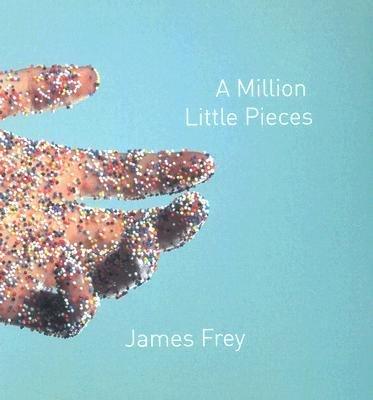
I’ve got a piece up in Together, a new recovery oriented newspaper for the New York area. I’m revisiting the James Frey boondoggle, but looking at it from a new (I hope) perspective. Check it out: The Millionth Word on “A Million Little Pieces.”

Together appears online and in print. I just got my print copy, and it looks like a gas, not just for people in the recovering community but for anyone interested in a more healthful, contemplative life.

Tagged , , , , , , ,

Tim Elhajj in The Yalobusha Review

I got my copy of The Yalobusha Review in the mail last night. My story 20/20 appears in this volume, and I couldn’t be more excited. This is the first paper bound literary magazine where my work has been published. I was looking it over at lunch today and feel proud to be in the same magazine with such great writers and such good work.

I’ve reprinted 20/20 on this site, so you can have a look.

Tagged , , ,

Dopefiend, a Recovery Memoir in Twelve Parts

Over twenty years ago, I moved to New York City to kick a heroin habit. I had less than twenty dollars in my pocket and was leaving behind my beautiful three-year-old boy, who had his mother’s straw colored hair and clear blue eyes, exactly the opposite of my own dark countenance. I searched for some recognizable piece of myself in his chipper smiling face but couldn’t find much.

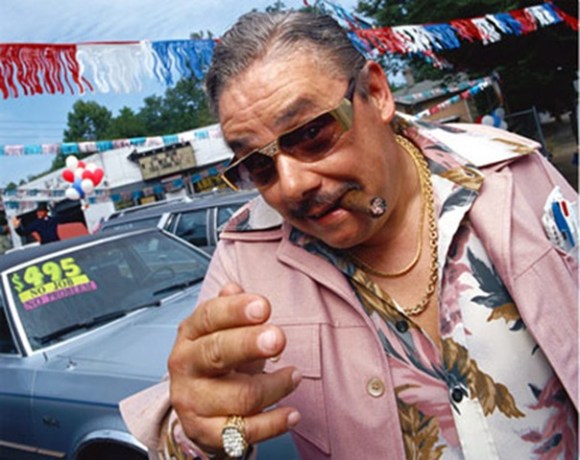
I lived in Steelton, a small-town in south central Pennsylvania. I had tried several times to stop using drugs there, but had found little success. There was a guy in Steelton who had been a heroin addict himself but had been clean for about five years: Scotty G. At the time, it seemed unimaginable to me that anyone who had once used heroin could go so long without the drug. Scotty was stocky with an open, friendly face. He wore his blond hair in a carefully greased crew cut, two slick curbs of hair rising on the receding hairline of his forehead like a McDonald’s sign. To ward off the coming winter, he wore a long pea coat. Scotty liked to wear black Wayfarer sunglasses, a host of gold rings on his fingers, and thick ropes of gold chain around his neck. He had a beautiful girlfriend, a busty redhead who smoked long brown cigarettes. Scotty always drove a new Ford sedan with dealer plates attached by magnets to the trunk. When dopefiends get sober, they invariably do one of two things to make a living: car sales or drug and alcohol counseling. Scotty worked at the big Ford dealership on Paxton and Cameron Streets, but he liked to show up to the 12-step meetings and do a little counseling on the side. We envied his jewelry, his shiny sedan, his pneumatic girlfriend. But his clean time held us in awe. Milling about Scotty during a smoke break at the meeting, we sipped coffee from Styrofoam cups and listened to whatever he had to say.

“There are only two things you need to do to stay sober,” Scotty said.

We all raised our eyebrows. We knew there were at least twelve things required in the meetings, even if we couldn’t articulate exactly what those things were. Yet here was Scotty talking about doing only two. Seemed like a bargain. We all shuffled in a little bit closer.

“First,” Scotty said. “Don’t get high.”

This was an obvious first step and a little chuckle rose up from the seven or eight of us standing there. If you’re not an addict, it may seem like this solves the entire problem. It does not. The list of things that can impose a moratorium on drug use is endless. Someone gets busted somewhere along the distribution chain and suddenly there are no drugs available. You have to stop. Or one day you might not be able to get your money together. And: you can always get busted. Not getting high is as much a part of getting high as being able to poke a vein or get your money together. The trick isn’t to stop using drugs, but to remain abstinent for the long haul.

“Second,” Scotty said.

And here he paused for effect and held up two fingers. This was the money step: the crucial information we needed to stay clean. The signet ring on Scotty’s stubby pinky glittered in the afternoon sun. I didn’t want to seem too eager, but I couldn’t help but feel that I was about to hear something momentous. I leaned in a little closer.

Scotty had a little half smile on his lips as he sipped his coffee and adjusted his coat.

“Boys,” he said. He glanced to his left and then to the right. When he was sure he had our undivided attention, he said: “Change your whole fucking life around.”

He laughed heartily at his own little joke and stroked his tummy. The rest of us stood there in silence. Scotty crushed out his cigarette and grinned. “Come on,” he said, walking past us. “Let’s get back to the meeting.”

Fucking Scotty G.

He was just toying with us then, but I have come to realize that Scotty G.’s little joke wasn’t really all that far from the truth. To successfully stop using drugs, I had to change just about every aspect of my life: I needed a spiritual, emotional, and intellectual makeover of the most sweeping kind.

Of course, I didn’t understand any of this back then. None of us did.

We all groaned and smirked and scowled. Someone shook his head. Another person laughed good-naturedly and said, “Cocksucker.” We were a forlorn little group of recovering addicts, who thought we had stumbled upon a bargain. Instead we had the same old dusty twelve “To Dos” we started with.

We all turned together as one and headed back into the church basement. The only way to get where I wanted to go was to do all twelve.

And it was a good thing I did.

As it turns out, my son grew from a beautiful blonde boy to a strapping hulk of a young man. He towers over me, his eyes still blue, his hair still clipped short. Over the years, he has looked skeptically at my long tresses, my affinity to dress in faded black jeans and combat boots, or my deep and abiding loathing for athleticism of any kind. The one thing we have in common is a penchant for self destruction: This tendency of ours is the most recognizable piece of me that I have ever found in him. The only way I could hope to help him with it, was to first find my own way through the maze.

Here is my story in twelve parts: a part for each step, a step for each part.

Tagged , , , , , , , , , , , ,