
Tim Elhajj and many others like this.
Tim Elhajj and many others like this.
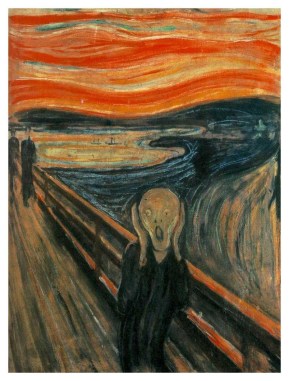
Charles Bock invites you to be outraged. This past Sunday Bock reviewed John D’Agata’s new nonfiction book, “About a Mountain,” describing the material this way:
The mountain that John D’Agata is ostensibly concerned with … is Yucca Mountain, located approximately 100 miles north of Las Vegas. … [S]ince the mid-1980s, the United States government has been doing back flips to bury the country’s entire reservoir of spent nuclear waste — some 77,000 tons of apocalyptic yumminess — deep inside Yucca. In the summer of 2002, the summer after D’Agata helped his mother move to a Vegas suburb, Congress was proceeding with plans to make the mountain a nuclear dump. Also that summer, 16-year-old Levi Presley jumped to his death from the observation deck of a third-rate Vegas hotel. These subjects, disparate though they are, animate D’Agata’s sprawling narrative.
But Bock doesn’t want to direct your outrage toward government backed destruction of the environment, youth suicide, or even sprawling nonfiction narratives. No. He wants to direct your rage to a few of D’Agata’s footnotes.
Yes, that’s right: the footnotes.
With such weighty material to discuss, it seems ridiculous to zero in on footnotes but perhaps these are some outrageous footnotes, deserving of the full weight of our scorn. D’Agata writes nonfiction, you see, and he acknowledges in one of his naughty footnotes that he conflates the dates of two key events in his story by three days. MY GOD.
Bock uses inflammatory language, calling the material referred to by the footnote a “lie.” He goes on to charge D’Agata with playing “fast and loose with a verifiable historical date.” I suppose this is true if by “verifiable” Bock means that he had to read the footnote where D’Agata presents the discrepancy. But I wonder if adding footnotes to nonfiction really deserves the “fast and loose” qualifier that’s typically employed to discuss immoral women, or deviant sexual behavior (as fun as those things can be!).
To be fair, Bock speaks highly of D’Agata’s work:
Rarely does D’Agata betray his emotions or reactions to an event; rather, he works by establishing a scene, introducing tangentially related elements, building layers of complexity and scope, then jump-cutting or circling back at just the right moment, guiding the reader safely — and unexpectedly — to a destination D’Agata had in sight the whole time.
And Bock understands the bigger picture. He knows what D’Agata is trying to do with creative nonfiction, not just in this book, but in the whole of his career:
As D’Agata himself writes, in his introduction to “The Lost Origins of the Essay”: “Do we read nonfiction in order to receive information, or do we read it to experience art? It’s not very clear sometimes. So this is a book that will try to offer the reader a clear objective: I am here in search of art.”
But ultimately Bock finds D’Agata’s voice lacking, having lost nothing less than his “moral authority” by conflating these dates. Although D’Agata offers no explanation for this conflation, Bock helpfully tenders a reason of his own: “for the sake of a tight narrative hook.” I don’t know. I haven’t read the book. But even knowing that the date of this child’s suicide has been conflated with some important back room vote doesn’t make the hook of this hard-to-grasp story much tighter for me. In Bock’s own words, the hook seems built on “layers of complexity and scope”; it does not easily give itself to a quick one line summary: this boy dies, that deal done. But even if we concede that a tidier hook is the reason for the conflation: Is it worthy of our scorn?
I’d argue that all of creative nonfiction suffers when we—writers and readers of creative nonfiction—allow journalists to manipulate us so easily. We do have to be wary of authors who pass off their fictions as truth. But do we need to be so dogmatic that a footnote raises a larger cry from us than anything found in our texts?
Of course, Bock can evaluate the book and the writer in whatever way he chooses. And calling into question the veracity of nonfiction is (sadly) the norm these days. I do want to know if the nonfiction book I’m reading has been made up. I just get tired of journalists revving up the scorn machine to score a point.
If John D’Agata can lose the moral high ground for footnoting his work, what does that say about us as readers and writers?
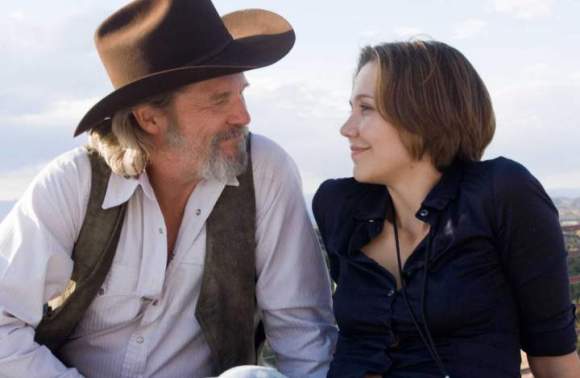
It’s hard to believe Maggie Gyllenhaal got an Oscar nomination for this. She’s not terrible, but she didn’t seem to bring much to this role. I have not read the book, but I got the sense that there must have been some dramatic tinkering going on with Bad’s alcoholic bottom. Was it softened up to make him seem less reprehensible? If so, that was a mistake. Maggie’s reaction seemed somewhat out-of-line and threw the rest of the movie off the rails.
The one thing that surprised me was Robert Duvall – The whole movie was by the numbers, but his was the one role that offered a pleasant surprise. I couldn’t figure out how his character functioned in the story until it was revealed (and it wasn’t like it was a big Hollywood reveal, but more like I was surprised that his character was the one playing that part, a crucial role for these kind of films). I thought it would be Maggie or the agent guy on the phone. And for all the singing that Bridges does, I thought Duvall’s little spoken word song was the most poignant of all. Good call on adding it to the closing credits.
 Present Tense