Category Archives: writing

The Sun Magazine Responds

I finally got a response from The Sun. They couldn’t use my story Saved. When they say they may take six months, they really mean it. I sent it out to them early last November. I sent it so long ago, they had to affix a little extra postage to get my SASE back to me. I thought that was mighty nice of them.

Twice now people have suggested I send them my story The Solution to All My Problems. After reading some of Poe Ballantine‘s work, I believe they may be right. I’d love to have a story in The Sun.

Tagged , , , , ,

Inching Toward Publication

07-05-2005 (137)

Some small success to report on the publishing front.

One of my stories has been selected as a finalist for an anthology about fathers, My Dad is My Hero (Adams Press, Spring 2009). My story is one of 53 selected, but only 50 will be published. I’ll find out in July or August if I made the cut. Keep your fingers crossed, people.

The story I submitted is an excerpt from a current post on the blog (the contract I signed allows me to continue to publish it here, even if it’s selected). And that post is actually an excerpt from a longer chapter in my memoir. It’s ironic that the the anthology is about heroic fathers: the full chapter from the memoir offers a somewhat different sensibility about Dad, or at least it juxtaposes a heroic Dad against a more needy Dad. Despite this irony, Dad still makes out pretty good in my memory (as he does in my book).

If you’re wondering (especially you people at home), my childhood memoir isn’t meant as an attack on Dad or anyone else. The more I write, the more I learn about the story, but from what I can tell right now it’s learning to appreciate your own talents and sensibilities, instead of trying to be someone you’re not.

If you want a memoir that’s an attack on fatherhood, read Augusten Burroughs’s Wolf at the Table. I’m only 100 pages in, but Mr. Burroughs is so bitter with his father, it’s hard for me to read.

Tagged , , , , ,

A Mother’s Day Story

I wanted to post another excerpt from the work I’ve been doing in my memoir.

I show my wife all the stories I come up with and rely on her sage comments and suggestions. After reading this one, she said, “You were such an pain in the ass.”

But she said it with love.

I call this one, “I Am Not Your Broom” (with apologies to They Might Be Giants).

I Am Not Your Broom

“I’m sick of this,” Mom says. “Sick of it.”

I am lying on the love seat and hear Mom come grousing into the living room. Cocking my head, I see she is upset but have no idea why. I ignore her and continue to watch TV, a dull sitcom from the 60s.

My little brothers retreat from the living room to the front porch. Still complaining, Mom continues into the kitchen. I can hear the kettle being filled with water for coffee as Terri heads up the stairs toward her room, calling for Tina to follow.

When Mom’s mood plummets, everyone knows to leave her alone. She makes coffee, calls one of her sisters, or just sits at the kitchen table, staring across the room. This has been going on for as long as I can remember. When I was little, Mom would regularly throw everyone out of the house. I remember staggering into the afternoon sunlight, after being in the cool of the living room, curled up with a book. Mom would say, “Run around, play! Have fun like a normal kid, for Christ’s sake.”

Although I can go hang out with my new friends at their apartment on Front Street, I decide to hold my ground here in the living room instead. I haven’t had an opportunity to swipe any cigarettes, and I hate to arrive at the girls’ apartment empty handed. I focus on the TV, even though I’m not that interested in the program.

Mom stands in the entrance to the living room.

“Out,” she commands.

Continue reading

Tagged , , , , ,

Getting to Home Plate

Aaron is a talented baseball player, but this year his ability caused him problems. He couldn’t get onto the team he’s been playing on for the last five years because the coaches felt the teams would disproportionately matched. He was disappointed. I took him to his first practice on the new team. He didn’t know any of the other kids, but the coaches knew his name and seemed excited to have him. At home he moped and complained. This went on for a week or two. Holly and I were considering letting him sit out a year and then it all changed, almost overnight.

I came home from work one night and found him in the living room practicing his wind up. He seemed excited. He told me that on his new team if he was on third base and the pitcher accidentally stepped off the rubber he could steal home. I asked if that was a new rule for this year (each year the league adds new elements to the game, like stealing bases or allowing the kids to pitch). He said it wasn’t. In fact, the kids have been able to steal home like this for a few years, but his old coach considered it poor sportsmanship and wouldn’t let the boys do it. 

But Aaron has no compunction with getting to home plate this way and apparently neither does the new coach. This is what I love about Aaron. He finds himself in a new situation and finds a way to make the best of it.

I have been struggling to get my memoir moving forward. The last chapter I wrote was almost a year ago. Since then I have switched jobs, taken on sweeping life style changes, and even lost 30 lbs. I’ve poked around with submitting my work (and I feel good about that) and I’ve been toying with essays from different parts of my life, but I have to find a way to get to home plate with this manuscript.

Tagged ,

The Sun Magazine

The Sun Magazine seems like my kind of journal.

This is a followup to my earlier effort, about figuring out how to submit my work. And a big part of accomplishing that is figuring out where to submit your work.

Short fiction and poetry dominate most literary journals, so it’s nice to find a magazine with as strong a commitment to personal narrative as The Sun. They seem to favor longer stories. And now they’re offering more money for work that’s accepted for publication.

But they take a long time to respond. I’ve had my story, Saved, out to them since November 3.

Tagged , , ,

Strange Submission

cover-big

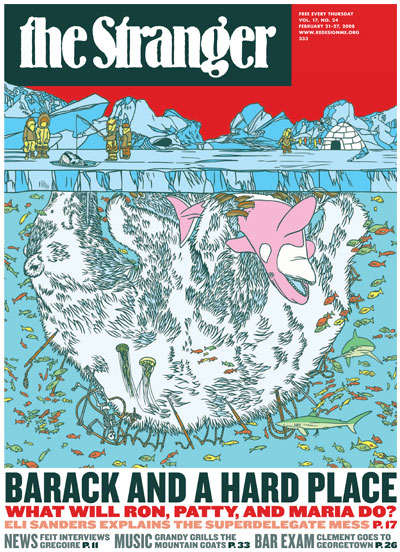
Today I sent my story, The Solution to All My Problems, over to The Stranger, which bills itself as Seattle’s only newspaper. It’s certinally the only Seattle newspaper that’s going to publish a story about jacking your Mom’s purse, even if it is told in an amusing way.

The story doesn’t freak me out as much anymore. It’s a commodity. I’m just another struggling writer sending his work around. I realize it’s not the kind of story you can tell at a party (or even an AA meeting, it turns out). But I like to think it works as an essay.

Let’s see what The Stranger thinks.

Tagged , , , ,

Why Do We Write Memoir?


Because it’s the hottest new upcoming genre on the publishing scene?

Perhaps. God knows writing about one’s own self is nothing new, but memoir has been very popular for about the last ten years. Recently James Frey famously taught us that labeling fiction as memoir can make your work more interesting and publishable.

But not everyone is as mercenary.

Listening to a broadcast on NPR earlier this month, I was astonished to hear the family of a former slave discuss their ancestor. The radio show featured David Blight’s new book, A Slave No More, which includes two never before published escape narratives written by former slaves. To celebrate the stories coming to light, the show invited three generations of Washington’s–descendants of one of the authors–to discuss their ancestor’s story.

Okay, fine. But here’s the astonishing part: Until Blight approached them, they had no idea their ancestor was a slave. The whole story was news to them. News to most of the people in the family. A family secret, even to the family.

Discussing the reasons why the manuscript may have been hidden, the eldest Washington (granddaughter to the author) mentioned the stigma of being a former slave, of their earlier generations wanting to put those years behind them. Thirty years past the Civil Rights Movement, this stigma seemed a little odd, especially now that we celebrate these types of narratives.

This former slave probably had little formal school. His family didn’t want him broadcasting his past. And even though he had written his story after the Civil War, he was still writing in a hostile world, with the odds decidedly against him. But he found the time and inclination to write it all out. Maybe he just wanted to leave a record for his ancestors. Maybe he wanted to better understand his journey.

Or maybe he just new it was a good one. Too good to let go to waste.

Tagged

A Good Teacher is Hard to Find

apple.jpg

Brevity recently posted about a writing teacher with a problem: one of her memoir students was afraid that if she told her story people would think she was a jerk. This particular student’s story involved higher stakes than most of us will ever face (her remorse over the death of an innocent man), but if you’ve ever tried to write memoir, you know this fear. No matter your circumstances, memoir writing always includes the challenge of putting yourself out there in a story.

What struck me was the homerun advice this teacher gave her student:

The following week, I struggled to find something to tell her. Then I found a quote that for me defined the real purpose of the personal memoir. It was from Margery Williams’ The Velveteen Rabbit:

“What is REAL?” asked the Rabbit one day…. “Does it happen all at once or bit by bit?”

“It doesn’t happen all at once,” said the Skin Horse. “You come. It takes a long time. That’s why it doesn’t often happen to people who break easily, or have sharp edges or who have to be carefully kept. Generally, by the time you are REAL, most of your hair has been loved off, and your eyes drop out and you get loose in the joints and very shabby. But these things don’t matter at all, because once you are REAL, you can’t be ugly, except to the people who don’t understand.”

I told my student that she had to be real. If she revealed her true self and experience to the world, then she could only be a jerk to those unwilling to understand.

— Debbie Hagan

Where do you find teachers like this?

I ask this literally. I had excellent teachers when I was an undergraduate, but choosing them was completely dumb luck. I’ve tried taking classes since, and while I haven’t had any terrible teachers, I haven’t been that impressed either.

I have tried different strategies to find a good teacher, all to no avail. One of my recent teachers, who published a wonderful memoir and was teaching at one of this area’s more prestigious (and expensive) schools couldn’t articulate how to use present tense verbs to make temporal transitions. Teaching is a completely different skill set from writing. I have no doubt that this teacher knew how to make these transitions in her own writing, but she couldn’t explain it to save her life.

To be fair, I’m not sure I could clearly explain the mechanics of grammar. And I’m not even sure that’s what I want in a creative writing teacher. I am more interested in reading my work and listening to other’s work. I like the feeling I get collaborating with other writers. So what do I want from a teacher? I want encouragement. Honesty and good judgment. If I am frightened, I want my teacher to struggle the following week to find something to say.

I am not sure it’s possible for someone to teach you to be a financially successful writer, but it shouldn’t be so hard to find a good teacher.

Tagged , ,

The Internet Meme Post

Until I read about it on Sarah’s blog, I wasn’t sure what a meme was.

Now I realize it’s one of those things that sweeps across the Internet, making me feel all old and unhip. The last one I remember was All Your Base Are Belong To Us. Apparently you don’t need a poorly translated Japanese video game to attempt this sort of thing, as my friends are asking me to participate in our own grass roots phenomenon. We’re writing a meme about our strengths as writers.

My three greatest strengths as a writer are 1) having had good teachers, 2) being militantly on my own side, and 3) sticking it out for the long haul.

I had excellent writing teachers in college. I knew they were good teachers at the time, but I didn’t realize what an asset this was for me until recently. Not long ago a guy with an MFA started at my day job and he explained to me that writing workshops have gone out of style. A dozen years ago the workshop was the highlight of my academic experience. There may have been a few in-class written exercises, possibly even a (short) lecture or two. But in the writing classes, we mostly workshopped. My friend with the MFA explained that writing classes that focus exclusively on workshops are now generally viewed as a poor idea, because students tend to rip one another’s work apart. I can see how that would happen (especially in an MFA program). There’s someone like that in every class. In my undergraduate classes, it wasn’t so much that my teachers managed to carve out a safe place in their classrooms (they certainly did), but rather they taught us how to figure out what was working in a piece and to focus on that part. This, I think, has made all the difference. So here’s to Louise DeSalvo, Jenny Shute, Bill Root, and Donna Masini (I’m sure I’ve forgotten a few).

Being militantly on your own side is a phrase I read in an Anne Lamott book, but I immediately decided to steal it for my own. To me it means sticking up for my work, no matter what the consequences. Probably the result of a lifetime of low self-esteem, here is how it works: I pretend my work (especially new work) is like the retarded little brother I never had. My work may slobber a little when it laughs, have cowlicks that jut oddly from its skull, or wear its pants pulled way up above its bellybutton. In my heart I know that each of these deficiencies will have to be looked at and objectively weighed and ultimately sorted out. That’s all okay. But nobody gets to disrespect my retarded little brother.

Sticking it out for the long haul just means consistently finding time to write. Somehow I manage to find a little time each week to devote to writing. If anything, I owe Holly a huge debt of gratitude for her support. And in return I am going to tag her to write about her strengths as a writer.

Holly Huckeba

Tagged

My Favorite Father Story

For Father’s Day, here is an exerpt from the memoir I am working on. This is from a chapter called Save the Children.

The Gremlin

A FEW DAYS GO BY AND I have almost forgotten about the day Mom threatened to leave. Dad comes home unexpectedly one afternoon and asks me if I want to go for a ride.

“Where?” I ask.

“What do you care,” he says. “Come on. Go for a ride with your dad.”

I feel a little anxious about committing to something as visible as a trip with Dad, but I decide I don’t have much to lose. This summer I am spending most of my time at an apartment down on Front Street, smoking cigarettes and attempting to impress two young ladies who are somewhat older than me. My sister Terri, my primary ally in the house, is only now just beginning to shun my company for the company of our next door neighbor. Although Terri and I are not disdainful of one another yet, our relationship has devolved into constant pestering: I bum cigarettes from her while she chides me to help her clean. I hold a vague hope that I can hide my travel with Dad from the rest of the family, but especially from Terri.

Jumping into his Gremlin, I slink down into the passenger seat, furtively looking out the windows. How will Dad feel if I ask him to drop me off up the block when we get home?

As it turns out, none of that matters. This is the first of many car trips for me and Dad that summer. At the start of each trip, I am always a little hesitant to get in the car, but once we pull away from the curb, everything changes: I am on the road with Dad.

I get to operate the radio and the 8-track tape player. He teaches me how to read a road map. If we stop for gas, I watch as he jots down mileage and time in a little spiral notebook he keeps in the glove box. We always go to his brother or one of his sister’s houses, just like the whole family did when we were kids; only now, it’s just me and Dad.

Continue reading

Tagged , ,